Form.
By day nine i had already been through Tokyo, Sapporo, and Sendai. each city had been a different version of the same question: how does Japan hold onto things? Kyoto was supposed to be the obvious answer. the temples, the preserved streetscapes, the geisha districts. but the most interesting thing i saw that day wasn't a shrine. it was a paint company.
The Nanzen-ji aqueduct does not look like infrastructure. it looks like something that grew there. red brick arches running through the middle of a Zen temple complex, carrying water from Lake Biwa down into the city. built in 1890. the guide explained that when it was proposed, people protested, said it would ruin the sacred grounds. now it is one of the most photographed structures in Kyoto. the city absorbed it so completely you forget it was ever a disruption.
We walked through the tunnel underneath it. cool air, curved brick overhead, light punching through from both ends. then up to the Keage Incline, the old railed slope where boats used to be carried between canal levels before the locks were built. the tracks are still there, overgrown with grass now, cherry trees planted along the sides. it runs at an angle up a hill and goes nowhere anymore. Kyoto keeps things like this. not as museums exactly, more like the city just never got around to removing them, and then decided it was glad it hadn't.
Heian Shrine was the last stop before the main event. the garden there operates on borrowed scenery, shakkei, the technique of framing distant mountains into the composition so the garden feels larger than it is. nothing accidental. the designer chose every sightline. a garden that appears natural is actually a series of deliberate decisions about what to include and what to hide.
About that word. form. what it takes to hold a form across time.
Then we went to Ueba Esou.
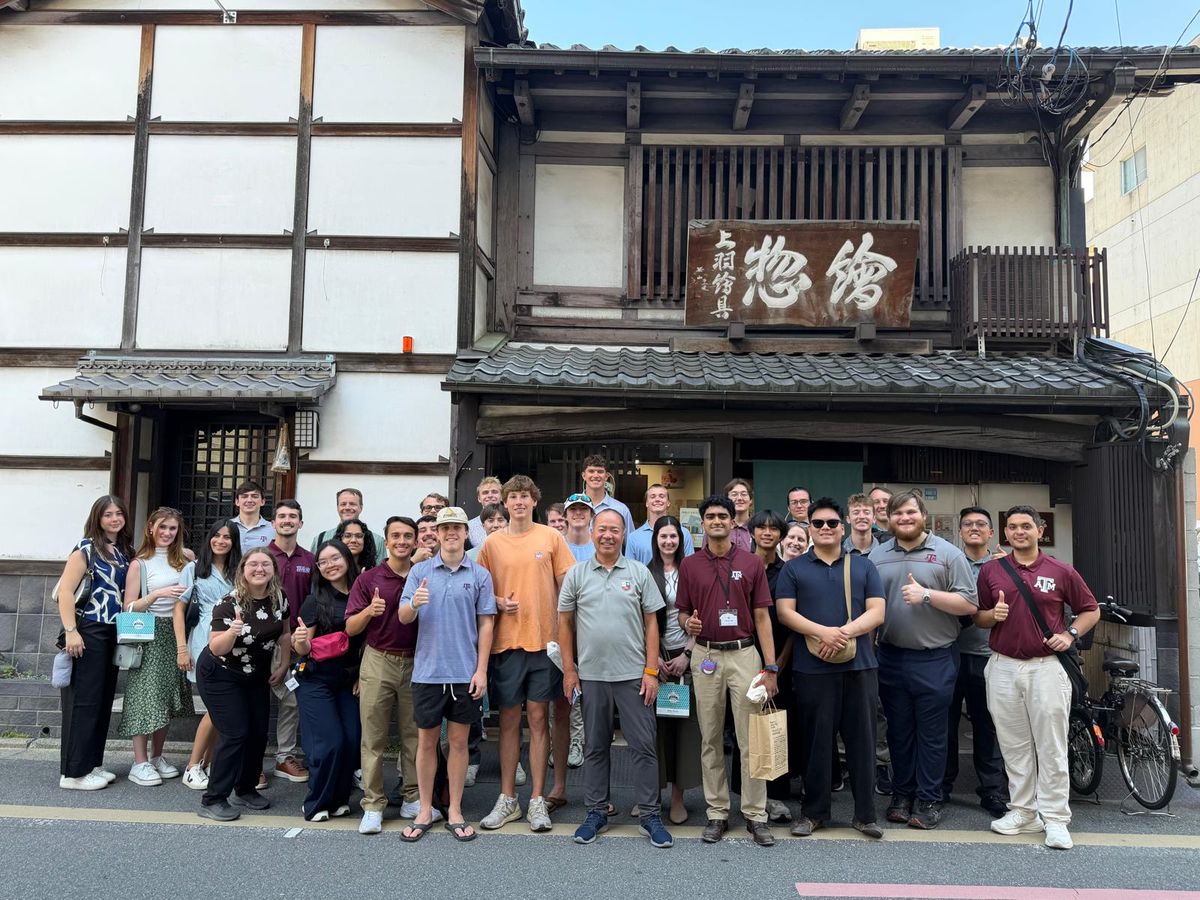
The building is old in the way that makes you stop before you go in. dark wood exterior, worn kanji signage, the kind of structure that looks like it knows exactly what it is. the company has been making traditional Japanese pigments since 1751. the man showing us around was the eleventh generation of his family to run it. still operating out of the same kura storehouse.
Inside, the shelves run floor to ceiling with pigment bottles, hundreds of them, colors i did not have names for. not paint in the way you think of paint. mineral pigments ground by hand, mixed with animal glue, the same process refined across eleven generations of one family. he explained that most companies that used to do this full process have stopped. some industrialized. some now buy their refined materials from Ueba Esou itself. only one or two places in Japan still do the full zero-to-one work.
Then he mentioned something that stopped me. a product they introduced fifteen years ago. he called it new.
Fifteen years. new.
His time horizon is not a fiscal year or a five-year plan. it is generational. he is not trying to build something that lasts until the next milestone. he is trying to hold a form across centuries, and he knows that means thinking like a custodian rather than an owner.
A second-year apprentice was working at the bench when we came through. she was not reading a manual. she was not watching a training video. she was standing next to a master craftsman, watching, adjusting, repeating. the knowledge she was receiving did not exist in any document. it existed in proximity, in repetition, in the willingness to get it wrong and be corrected ten thousand times until the form becomes instinct.
That word again. form. kata in Japanese, the idea that you copy the master's process exactly, without variation, until the foundation is so internalized that genuine creativity becomes possible. you cannot skip to the creativity. the form has to come first.
I stood there for a while after the explanation ended. everyone else moved on to look at the pigment displays and i just stayed near the workbench and watched her hands.
That night i walked into Gion district.
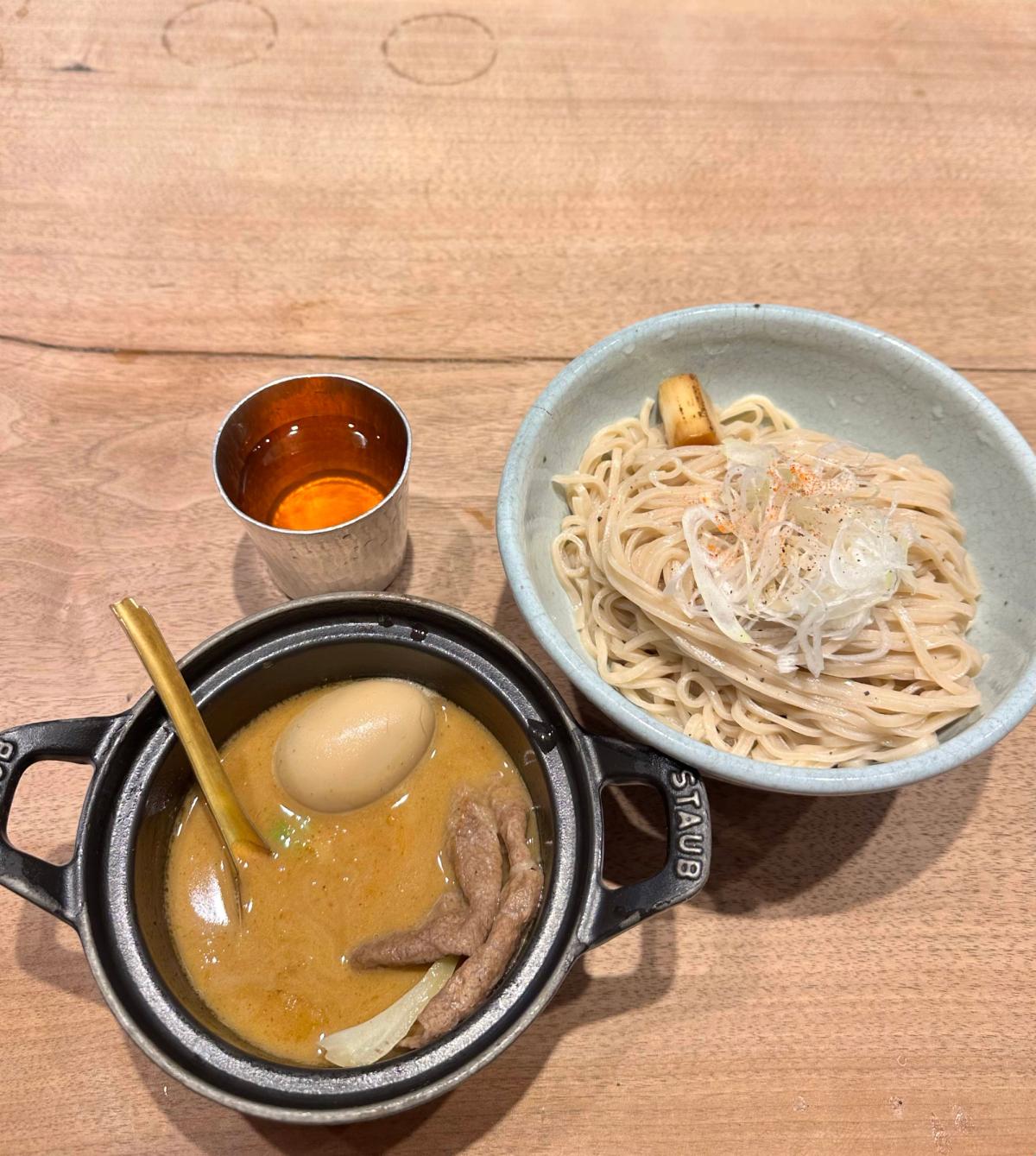
I ate at Men-ya Takakura Nijo. wagyu tsukemen, thick noodles served cold in a celadon bowl alongside a small Staub pot of rich golden broth, wagyu slices, soft-boiled egg. you dip, not pour.
yummy
That night i walked into Gion district.
The lanterns were lit. rows of them, white paper rectangles glowing warm against the dark, running down the length of the street. the wooden machiya townhouses on either side, narrow facades, deep interiors, some of them restaurants with the noren curtain hanging in the doorway. a few people in yukata moving slowly. the whole district felt like a form being held.
The whole day had been about the same question from different angles. what does it take to hold a form across time? not preserve it behind glass, not explain it on a placard, but actually keep it alive, keep doing it, keep passing it to the next person?
Ueba Esou's answer is an apprentice standing at a workbench every day for years.
Gion's answer is a district that made rules about its own appearance and decided to enforce them.
The aqueduct's answer is that sometimes a city absorbs something new so completely that it stops being a disruption and starts being part of the form itself.
The lanterns were still lit when i left.