invisible losses
That's what i kept coming back to by the end of the day. Three completely different experiences across shibuya, harajuku, and tsukiji. Same question running underneath all of them. What disappears when nobody's paying attention?
The day started with a grid of dogs.
The mymizu co-founder put them on the screen and asked everyone to pick the one that matched their mood. It got a laugh. Then i realized he wasn't being funny. Before a single fact about the company, before credentials or slides or statistics, he checked the emotional temperature of the room. In japan you set the atmosphere before you start work. That detail set the tone for everything that followed.
We were at Shibuya QWS, a co-creation hub backed by Japan’s major rail companies, sitting in a startup presentation on a saturday morning. The company seemed almost too simple on the surface: an app that maps free water refill stations so people can skip plastic bottles. Sixty-six million plastic bottles used in Japan every single day. One vending machine for every thirty people. The problem is enormous. Their response wasn't a guilt campaign or a regulation push. They just made the sustainable choice easier to find.
They never raised outside funding. They ran guerrilla marketing at the rugby world cup because they had no budget. Years of building on creativity and mission alignment before anyone outside Japan knew what it was.
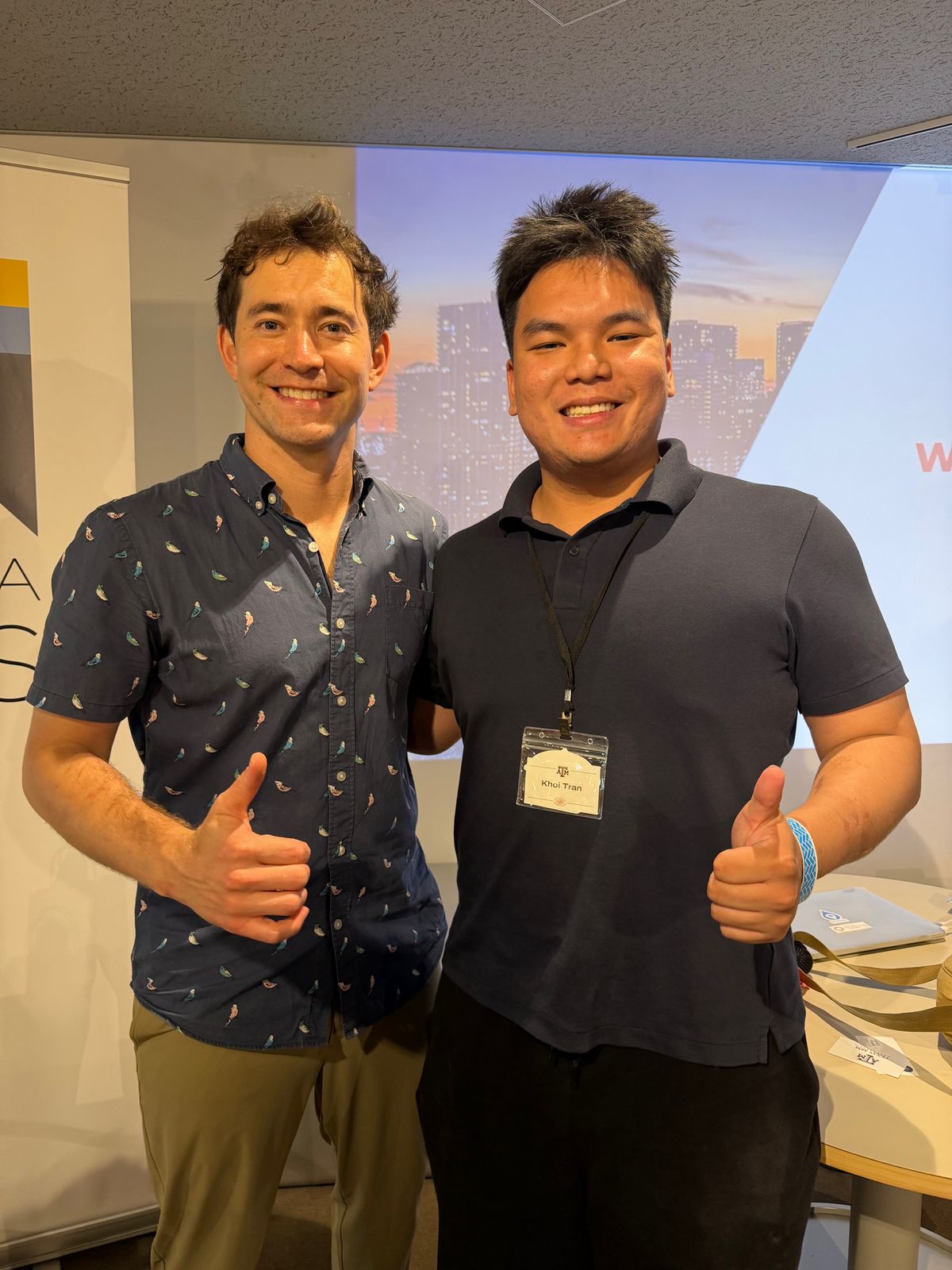
Me and mymizu’s cofounder Robin Lewis
I asked about failure stigma. Whether Japan’s culture makes it harder to build a startup here. The answer was honest. Yes. Failure carries more social weight. But the startups that survive tend to build slower, sturdier things. Different cost, different reward. I haven't stopped thinking about which side of that tradeoff i want to be on.
The part that hit hardest was something he called ancestral intelligence.
He showed examples from Edo-period japan, a society that was almost entirely circular before modern consumer culture arrived. Umbrellas were repaired. Kimono were passed down. Bottles were reused. Japan was once one of the most resource-efficient societies on earth. Then convenience arrived and the system broke.
mymizu isn't trying to invent something new. It's trying to remember something old.
I kept thinking about engenium.
My startup exists because companies lose critical knowledge when experienced employees leave. The knowledge walks out quietly and nobody notices until it's already gone. mymizu preserves environmental behavior. Engenium preserves organizational knowledge. Completely different products, completely different markets. But sitting in that room i realized we're fighting the same thing. Invisible losses. Things that disappear without headlines, without announcements, without anyone realizing what's gone until it's too late.
The co-founder never framed it that way. That connection was mine.
A few hours later i was standing inside Meiji Shrine, and the theme showed up again wearing completely different clothes.
The guide mentioned something that stopped me mid-step. The entire forest surrounding the shrine, all those ancient-looking trees, the dense canopy, the feeling of stepping back centuries, was planted by hand about a hundred years ago. None of it grew naturally. What looks timeless was designed, engineered, and maintained across generations.
That's japan in one sentence. The things that look ancient are usually carefully built systems.
I did the etiquette properly. Bowed at the torii. Stayed off the center of the path. Purified my hands and mouth before entering. The purification isn't about hygiene. It's about crossing from ordinary space into sacred space, marking the shift with your body. Then a wedding procession appeared. A bride under a red parasol, priests leading the way, family following in formal kimono. A real ceremony, not a performance. The shrine was still being used for exactly what it was built for.
I bought two omamori charms before leaving. One for business. One for relationships. After everything the morning had surfaced about preservation and invisible losses, they didn't feel like souvenirs. They felt like intentions.
The day ended in a tsukiji kitchen making nikujaga and gyoza from scratch.
The instructor explained dashi, the clear stock at the base of almost every japanese dish. Bonito flakes take a six-month process: boiling, smoking, fermenting, drying, and shaving before they ever reach a pot. Then she showed us three types of miso: white from kyoto, medium used across japan, and deeply fermented red. Each one a different region, a different timeline, a different philosophy about depth and time.
Even soup is a system. Patience folded into something that looks simple.
By the time i got back to the hotel i realized the day had been asking the same question three different ways. mymizu asked it through plastic bottles and behavior design. meiji shrine asked it through a forest nobody remembers planting. the cooking class asked it through a broth that takes six months to make.
What do you lose when you stop paying attention to how things are built?
I don't have a clean answer. But i'm thinking about it differently now.